Skip to content

Standing water that accumulates in your yard after rain can be more than an inconvenience. Water pooling in your yard may indicate poor grading, compacted soil, clogged drainage systems, or a high water table. If left unresolved, these yard drainage problems can damage your lawn, patio, retaining walls, and even your home’s foundation.
On Massachusetts’ South Shore, heavy rainfall, snowmelt, clay-heavy soil, coastal conditions, and winter freeze-thaw cycles can make drainage problems particularly challenging. Water that has nowhere to go can collect around your home, saturate the ground, and cause damage that becomes more expensive to repair over time.
Are you tired of asking how to get rid of standing water in yards like yours? Fortunately, several effective yard drainage solutions are available. The best option depends on why water collects, where it comes from, and how your property’s landscape handles runoff.
In this guide, we’ll explain the most common reasons water pools in a yard, what common drainage problems in yards we see in the local area, how to identify drainage problems, and which solutions can help keep your property dry and protected.
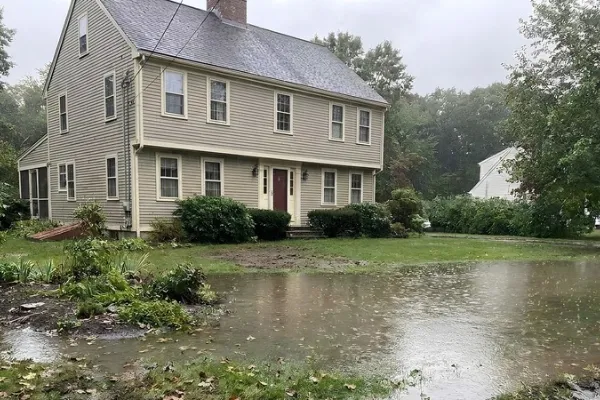
Why Standing Water in Your Yard Shouldn’t Be Ignored
Occasional puddles after an unusually heavy rain may not be cause for concern. However, water that consistently collects in the same areas, takes days to disappear, or pools near your home could indicate a drainage problem that needs attention.
Foundation and Structural Damage
When water collects near your foundation, it saturates the surrounding soil and increases hydrostatic pressure against foundation walls. Over time, this pressure can contribute to cracks, water infiltration, basement moisture, and structural deterioration.
Older South Shore homes with stone, brick, or masonry foundations may be particularly vulnerable to prolonged moisture exposure. Water can also accelerate mortar deterioration and weaken already compromised areas.
Damage to Patios, Walkways, and Retaining Walls
Poor drainage doesn’t just affect your home’s foundation. Saturated soil beneath patios, walkways, and retaining walls can lose stability.
During winter, water trapped beneath masonry or hardscaping freezes and expands. As the ground thaws, it may settle unevenly, leaving pavers loose, walkways uneven, and retaining walls vulnerable to shifting or cracking.
Lawn, Landscaping, and Plant Damage
Grass and many landscape plants struggle when their roots remain submerged for extended periods. Excess water can limit oxygen in the soil, weakening roots, killing grass, and making plants more susceptible to disease.
Repeated flooding can also wash away mulch, erode soil, expose roots, and damage landscape beds.
Mosquitoes and Other Pest Concerns
Standing water creates favorable breeding conditions for mosquitoes. Persistent puddles can also attract other pests and make portions of your yard unpleasant or unusable.
If you have recurring standing water, addressing the drainage issue can help improve both the usability and overall health of your outdoor space.
What Causes Water Pooling in Yard?
Before choosing a drain for pooling water in your yard, understand what’s causing the problem. Installing the wrong drainage system can waste money while leaving the underlying issue unresolved.
1. Poor Grading or Negative Slope
Grading determines how water moves across your property. Ideally, the ground surrounding your home slopes away from the foundation so rainwater and snowmelt can move toward appropriate drainage areas.
When the ground is flat, uneven, or slopes toward your house, water can collect in low spots or flow directly toward your foundation.
This is known as negative grading.
Over time, soil settlement, landscaping changes, additions, and construction work can change your yard’s slope. Even a property that drained well when it was first built may develop drainage problems years later.

2. Compacted or Clay-Heavy Soil
Soil needs enough space between particles to allow water and air to move through it. When soil becomes compacted, those spaces shrink, making it harder for water to penetrate.
Clay-heavy soils present another challenge because they naturally drain more slowly than sandy or loamy soils.
Common causes of poor soil drainage include:
- Heavy foot traffic
- Vehicles or equipment traveling over the lawn
- Construction activity
- Poorly prepared landscaping soil
- Dense clay content
- Repeated wetting and drying
When rain falls faster than the ground can absorb it, water collects on the surface and creates puddles.

3. Clogged, Damaged, or Inadequate Drainage Systems
Existing drainage infrastructure can become less effective over time. French drains may become clogged with sediment, catch basins can fill with debris, and underground pipes may become damaged or obstructed.
You may notice that a drainage system no longer works as well as it once did, particularly after heavy rain.
Common drainage system problems include:
- Clogged catch basins or grates
- Sediment-filled French drains
- Crushed or damaged underground pipes
- Poorly positioned drain outlets
- Drainage systems that were undersized for the property
- Improperly installed pipes or insufficient slope
If your yard has an existing drainage system but still floods, you may need to have it inspected before installing additional infrastructure.

4. Downspouts Discharging Too Close to the House
Your gutter system collects a significant amount of rainwater from the roof. If downspouts discharge directly beside your foundation or into an area with poor drainage, that water can quickly saturate the soil.
A downspout that releases water into a low spot may also contribute to recurring puddles or erosion.
Redirecting downspouts away from the foundation and toward a suitable drainage area may help resolve some localized drainage problems.

5. A High Water Table
Some South Shore properties, particularly in low-lying and coastal areas, have naturally high groundwater levels.
When the water table rises following prolonged rainfall or seasonal changes, the soil may become saturated from below. In these situations, water can appear in your yard even when surface drainage seems adequate.
A high water table is more complicated to address than a simple low spot that leads to water pooling in yard. Grading alone may not provide a lasting solution, and drainage improvements need to account for groundwater conditions and appropriate discharge locations.

How to Identify the Source of Your Yard Drainage Problems
Not all standing water behaves the same way. Where it appears, how long it remains, and what happens during different weather conditions can provide clues about the cause. Here are some ideas on how to stop water from pooling in yard:
| What You Notice | Possible Cause | Potential Solution |
| Water pools beside the house | Negative grading or downspout discharge | Regrading or downspout redirection |
| A puddle forms in the same lawn area after rain | Low spot or compacted soil | Regrading or soil improvement |
| Water remains for days after rain | Poor soil permeability or inadequate drainage | Soil improvement, French drain, or other drainage system |
| Yard floods during heavy rain | Excess runoff or insufficient drainage capacity | Catch basin, surface drain, or drainage network |
| Water appears even without recent rainfall | High water table or groundwater issue | Professional drainage evaluation |
| Patio or walkway becomes uneven | Water beneath hardscaping and soil movement | Drainage correction and masonry repair |
| Basement leaks during storms | Foundation drainage or water pressure issues | Drainage assessment and appropriate foundation water management |
If the same areas repeatedly flood, take note of where water collects and how long it takes to disappear. These observations can help identify the drainage issue before you decide what repairs are needed. Contact us to discuss these and other related issues with your yard’s current drainage.
How Massachusetts Weather Makes Yard Drainage Problems Worse
South Shore properties experience a combination of weather conditions that can put considerable stress on drainage systems, soil, foundations, and hardscapes. Fighting with water pooling in yard every rainy season can be frustrating for Massachusetts homeowners.
Heavy Rainfall and Snowmelt
Rainstorms can overwhelm poorly designed drainage systems, particularly when water flows from roofs, driveways, patios, and neighboring properties into the same low area.
Snowmelt creates another challenge. When snow melts faster than the soil can absorb it, yards may become saturated even without significant rainfall.
The Freeze-Thaw Cycle
During winter, water in saturated soil freezes and expands. When temperatures rise, the soil thaws and contracts, sometimes settling unevenly.
Repeated freeze-thaw cycles can:
- Shift patio pavers and walkways
- Crack mortar joints
- Move retaining wall materials
- Disturb drainage pipes
- Create new low spots in the yard
- Worsen existing foundation cracks
A yard that consistently holds water in late fall may be more susceptible to damage during winter and early spring.
Coastal Soil and Groundwater Conditions
Homes in communities such as Marshfield, Duxbury, and Plymouth may experience additional drainage challenges due to low-lying terrain, groundwater conditions, or proximity to coastal areas.
Saturated soil, salt exposure, and changing groundwater conditions can make drainage planning more complicated. Solutions should account for the property’s location, soil characteristics, and where you can safely direct collected water.
Yard Drainage Solutions That Can Help Eliminate Standing Water
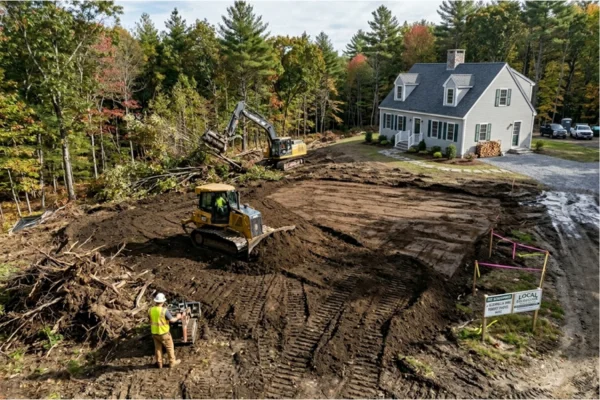
The best way to stop water from pooling in your yard is to correct the underlying problem. Depending on the property, that may involve changing the slope, improving soil conditions, or installing a drainage system.
Land Grading and Regrading
Regrading reshapes the ground to improve water flow and eliminate low areas where water collects.
It is often one of the most effective yard drainage solutions when the problem is caused by improper slope or uneven terrain.
Professional grading may involve:
- Adjusting the slope around your home
- Raising low spots in the lawn
- Creating a more consistent drainage path
- Redirecting runoff away from foundations
- Improving transitions between lawn, patio, and landscaped areas
Proper grading can provide a long-term solution when the underlying issue is surface elevation. However, it may not be enough when the soil is poorly permeable, or the groundwater level is high.

French Drains
A French drain is a subsurface drainage system designed to collect and redirect excess groundwater.
It typically consists of a trench filled with drainage stone and a perforated pipe that captures water and moves it toward an appropriate outlet.
French drains can help with:
- Persistent soggy areas
- Water collecting along foundations
- Groundwater movement
- Saturated soil around patios or retaining walls
- Drainage problems that grading alone cannot resolve
A French drain needs the correct depth, slope, materials, and outlet to work effectively. Poor installation or improper discharge can lead to clogging, ineffective drainage, or recurring problems.

Catch Basins and Surface Drains
Catch basins collect surface water from low areas of the property. Water enters through a grate and flows into an underground pipe that carries it away.
They can be especially useful when a specific part of your yard consistently collects runoff.
Surface drains and catch basins may be appropriate for:
- Lawn depressions
- Driveways
- Patio edges
- Walkways
- Areas receiving runoff from multiple surfaces
These systems are often used in combination with grading to improve how water moves across a property.
Image: https://drive.google.com/file/d/1mMVMW0q49s2mKYE2FsE47fnimddBtjG8/view?usp=drive_link
Alt Text: Workers in hard hats connect a corrugated pipe to a concrete catch basin in a muddy yard trench.
Dry Creek Beds
A dry creek bed is a landscaped channel designed to guide surface water during rainfall.
Typically constructed using gravel, decorative stone, and sometimes larger river rocks, dry creek beds can help control runoff while creating a natural landscaping feature.
They are particularly useful for properties where water needs a defined path to move through the yard.
A properly designed dry creek bed can:
- Reduce erosion
- Guide surface runoff
- Improve the appearance of drainage areas
- Integrate drainage into landscaping
- Help manage water flowing from higher elevations

Bioswales and Landscape Drainage
Bioswales are shallow, landscaped channels designed to slow runoff, filter pollutants, and allow some water to infiltrate the soil.
They may incorporate plants, soil, and other materials selected to tolerate periodic wet conditions.
Bioswales can work well in larger yards where there is enough space to manage runoff naturally. However, their effectiveness depends on soil permeability, water volume, available space, and site conditions.

Downspout Extensions and Runoff Redirection
Sometimes the solution is simpler than installing an entirely new drainage system. If your gutters are releasing water beside your home, extending or redirecting downspouts may reduce the amount of water saturating the soil near the foundation.
The discharge location must be carefully selected to avoid creating another drainage problem, flooding neighboring properties, or directing water toward structures.

Which Drainage Solution Is Right for Your Property?
Different yard drainage issues with water pooling in yard require different approaches. Here’s a quick comparison of common solutions.
| Drainage Solution | Best For | Primary Benefit |
| Regrading | Low spots and improper slope | Improves surface water flow |
| French drain | Persistent groundwater and saturated soil | Collects and redirects subsurface water |
| Catch basin | Localized surface pooling | Captures runoff at specific low points |
| Channel drain | Runoff along paved surfaces | Intercepts water across a linear area |
| Dry creek bed | Surface runoff and erosion | Creates a defined, landscaped drainage path |
| Bioswale | Larger landscaped areas | Slows and filters runoff |
| Downspout extension | Roof runoff near foundations | Moves concentrated water away from structures |
In some cases, more than one solution is needed. For example, regrading may direct water toward a catch basin, while a French drain manages moisture beneath a lawn or patio.
The goal isn’t simply to move water from one spot to another. It’s to manage runoff safely and effectively without creating new problems elsewhere.
Yard Drainage Before and After: Real Results
See how professional grading and drainage improvements can transform waterlogged yards into healthier, more functional outdoor spaces. Our before-and-after projects show how addressing poor grading, standing water, and drainage issues can improve water flow, protect surrounding masonry, and restore your yard’s usability. Every property is different, and the right solution starts with understanding how water moves across your landscape.


Drainage Considerations for Residential and Commercial Properties
Drainage problems can affect properties of all sizes, but residential and commercial sites often have different needs. Knowing how to fix pooling water in your yard and what drainage options to consider is vital to dealing with a soggy yard.
Residential Yard Drainage
Homeowners commonly experience drainage issues around:
- Foundations and basement walls
- Lawns and landscape beds
- Patios and walkways
- Driveways
- Retaining walls
- Pool areas
Residential drainage solutions should account for the home’s foundation, landscaping, existing hardscaping, and the way water moves across the entire property.

Commercial Drainage
Commercial properties often have larger paved areas that generate significant runoff. Parking lots, walkways, building entrances, loading areas, and landscaped sections may all contribute to drainage challenges.
Commercial drainage improvements may include:
- Catch basins and stormwater collection
- Surface channel drains
- Grading and slope adjustments
- Runoff management around buildings
- Drainage improvements near paved areas
- Erosion control
Because commercial sites manage larger volumes of water, drainage planning should consider the entire site rather than focusing on individual puddles.

Drainage Problems Around Patios, Walkways, and Retaining Walls
Drainage and masonry work are closely connected. Water that collects around or beneath a masonry structure can compromise its stability and shorten its lifespan.
Patios and Walkways
If a patio or walkway is uneven, sinking, or repeatedly affected by water, the underlying base may be saturated or unstable.
Drainage improvements may involve correcting slope, improving runoff management, rebuilding affected sections, or addressing water movement beneath the structure.
Retaining Walls
Retaining walls are designed to hold back soil, but they also need a way to manage water behind them.
Without adequate drainage, water can build up behind a retaining wall, increasing pressure against the structure. This can contribute to leaning, cracking, separation, or failure.
Drainage is an important part of both retaining wall construction and repair. Correcting water movement may help prevent the same damage from recurring after masonry repairs.
Why Choose a Local South Shore Drainage Contractor?
Drainage work isn’t one-size-fits-all. The soil, elevation, weather, landscaping, and construction style of your property all influence which solutions will work best.
Working with a local contractor who understands South Shore properties can make it easier to identify the source of recurring drainage problems and select solutions appropriate for the area.
At Masonry South Shore MA, we work with the grading, drainage, and masonry challenges common throughout the region. Our experience with local property conditions helps us evaluate how water is affecting your lawn, foundation, patios, walkways, and retaining walls.
We focus on identifying the cause of the problem, recommending practical solutions, and helping homeowners avoid repairs that only address the visible symptoms.
Whether you’re dealing with a soggy lawn, water collecting near your foundation, or drainage-related masonry damage, we can help you determine the next step.

Need help figuring out why your yard won’t drain? Ready to find out how to deal with water pooling in a yard like yours? Contact us to schedule a drainage assessment.
When Should You Call a Professional for Yard Drainage Problems?
Some minor puddles can improve with simple landscaping adjustments. However, recurring water pooling may require a professional evaluation to prevent additional damage.
Consider scheduling an assessment if:
- Water consistently pools near your home’s foundation
- Your basement or crawl space becomes damp after rain
- Large sections of your lawn remain soggy for several days
- Your patio, walkway, or retaining wall is shifting
- Water flows toward your home instead of away from it
- Existing drainage systems aren’t working properly
- Erosion is removing soil or exposing roots
- You have tried DIY drainage fixes without lasting results
A professional assessment can help determine whether the problem is related to grading, soil conditions, groundwater, drainage infrastructure, or a combination of factors.
What Does a Yard Drainage Assessment Include?
A drainage evaluation should look beyond the puddle itself. The goal is to understand where the water originates, how it moves across the property, and why it isn’t draining properly.
An assessment may include:
- Evaluating existing grading and slope
- Identifying low spots and areas of repeated pooling
- Inspecting downspout discharge locations
- Reviewing existing drains and drainage infrastructure
- Looking for signs of erosion or soil saturation
- Checking masonry structures affected by water
- Recommending appropriate corrective work
Once the cause is identified, you can make a more informed decision about which yard drainage solutions are appropriate for your property.

Frequently Asked Questions About Water Pooling in a Yard
Why is water pooling in my yard after rain?
Water may pool because of poor grading, compacted or clay-heavy soil, clogged drainage systems, downspouts discharging into low areas, or a high water table. If water repeatedly collects in the same spot, the area may need grading improvements or a drainage system designed to move excess water away.
How do I stop water from pooling in my yard?
The best way to stop water from pooling is to correct the cause. Regrading can improve surface drainage, while French drains, catch basins, and channel drains can collect and redirect excess water. Downspout extensions may also help. The right solution depends on the soil, slope, and source of the water.
What can I put in my yard to absorb water?
Soil amendments and aeration may help improve absorption in areas with mild compaction. Plants that tolerate wet conditions can also be useful in appropriate landscape areas. However, gravel, drainage stone, and other materials won’t solve every drainage problem. Persistent pooling may require regrading or a drainage system.
How long should water remain in my yard after rain?
Some temporary puddling after heavy rainfall is normal, but water that remains for more than a day or two, repeatedly saturates the same area, or collects near your foundation may indicate a drainage problem. The amount of rainfall, soil type, season, and groundwater conditions all affect how quickly a yard dries.
Are French drains good for yards that flood?
French drains can be effective for yards with persistent subsurface water or saturated soil. They collect excess water through a perforated pipe surrounded by drainage stone and direct it toward an appropriate outlet. They are not suitable for every flooding problem, so the source of the water should be identified before installation.
Does poor yard drainage damage a home’s foundation?
Yes. Water that repeatedly collects near a foundation can increase pressure against foundation walls, contribute to cracks, and allow moisture into basements or crawl spaces. Improving grading and drainage can help reduce prolonged water exposure, but existing foundation damage may also require repair.
How much does yard drainage repair cost on the South Shore of Massachusetts?
Yard drainage costs depend on the size of the affected area, soil conditions, accessibility, and the type of solution needed. Minor grading or downspout adjustments may cost considerably less than installing a French drain, catch basin, or extensive drainage system. An on-site evaluation is the best way to determine the scope and cost of the work.
Who should I call for water pooling in my yard?
If water pooling is affecting your lawn, foundation, patio, retaining wall, or other masonry structures, contact a contractor experienced in grading, drainage, and related structural work. A professional can identify the cause and recommend a solution suited to your property’s conditions.

Get Help Fixing Water Pooling in Your Yard
Persistent standing water can damage your lawn, weaken masonry, create erosion, and contribute to foundation moisture problems. The longer drainage issues continue, the greater the potential for additional repairs and the harder it can be to fix water pooling in a yard.
At Masonry South Shore MA, we help homeowners throughout Quincy, Braintree, Hingham, Marshfield, Duxbury, Plymouth, and surrounding South Shore communities address drainage and grading issues.
With more than 15 years of hands-on experience, our team can evaluate your property’s drainage conditions, identify problem areas, and recommend practical solutions based on your needs.
If you’re tired of soggy lawns, recurring puddles, or water collecting near your home, we’re ready to help. You do not have to deal with water pooling in a yard alone- our team is here to help.

Contact Masonry South Shore MA today to schedule your free yard drainage assessment. We’ll help you understand what’s causing the problem and what it will take to improve drainage on your property.